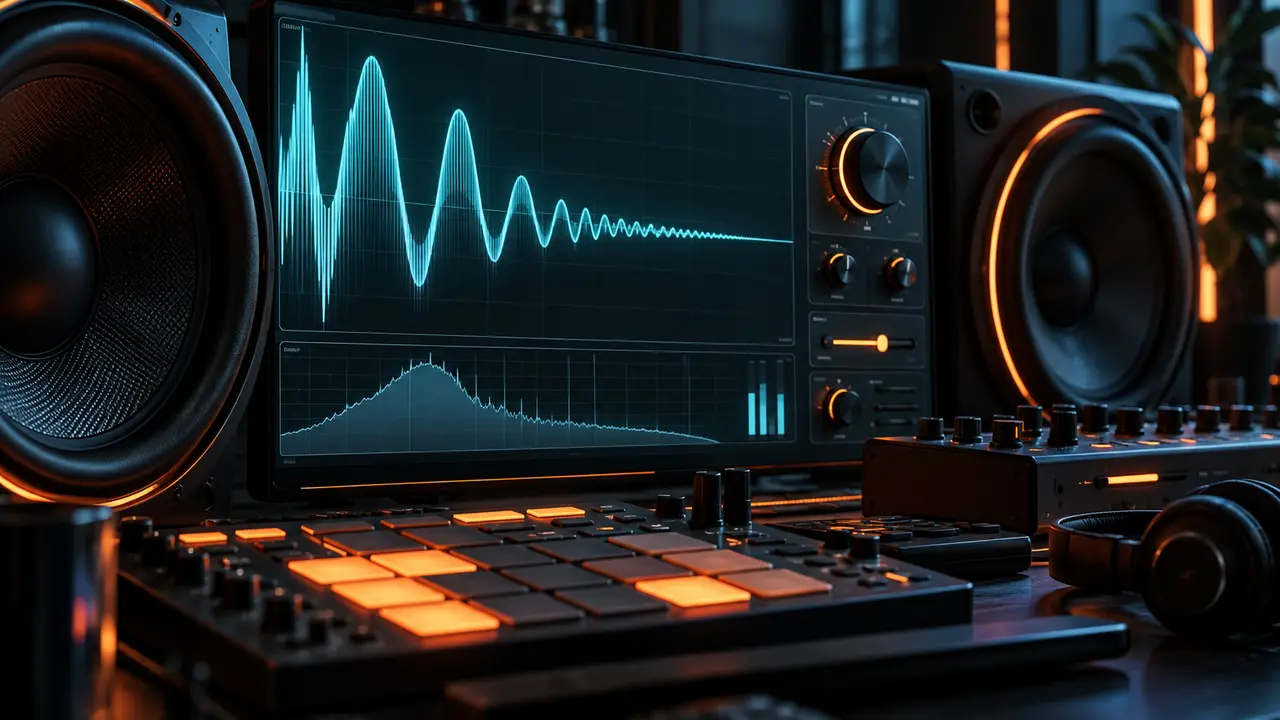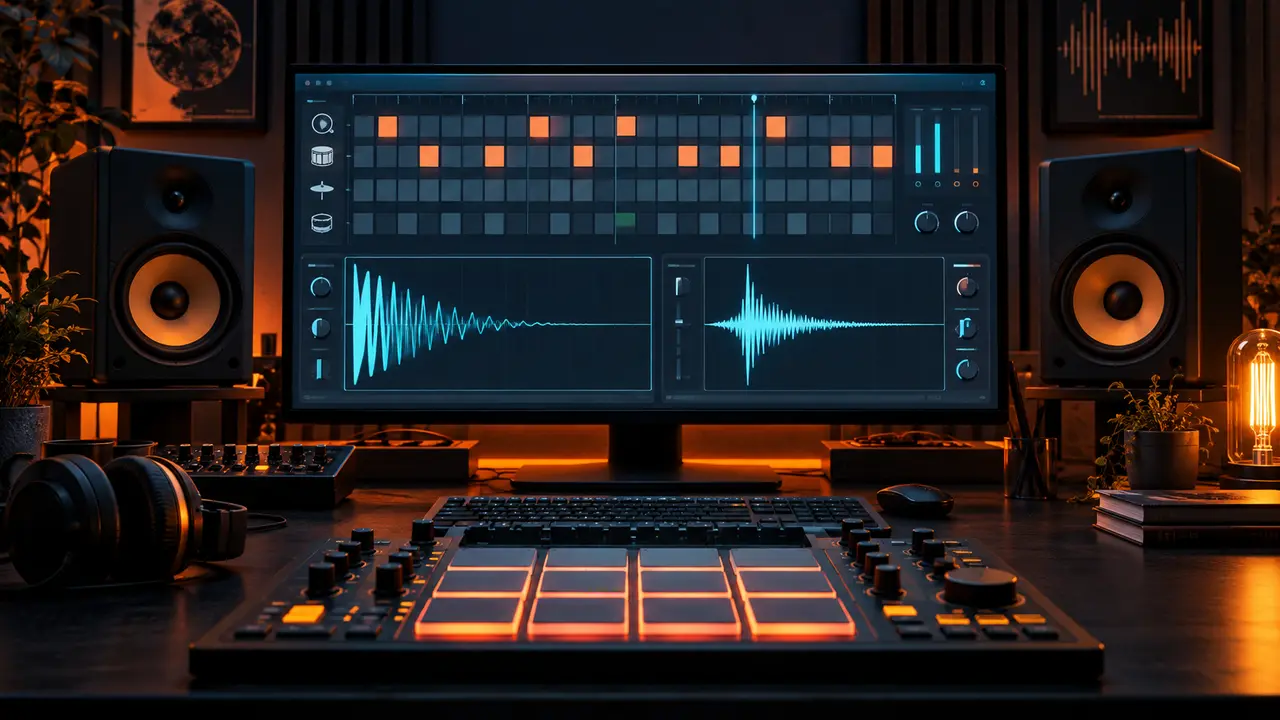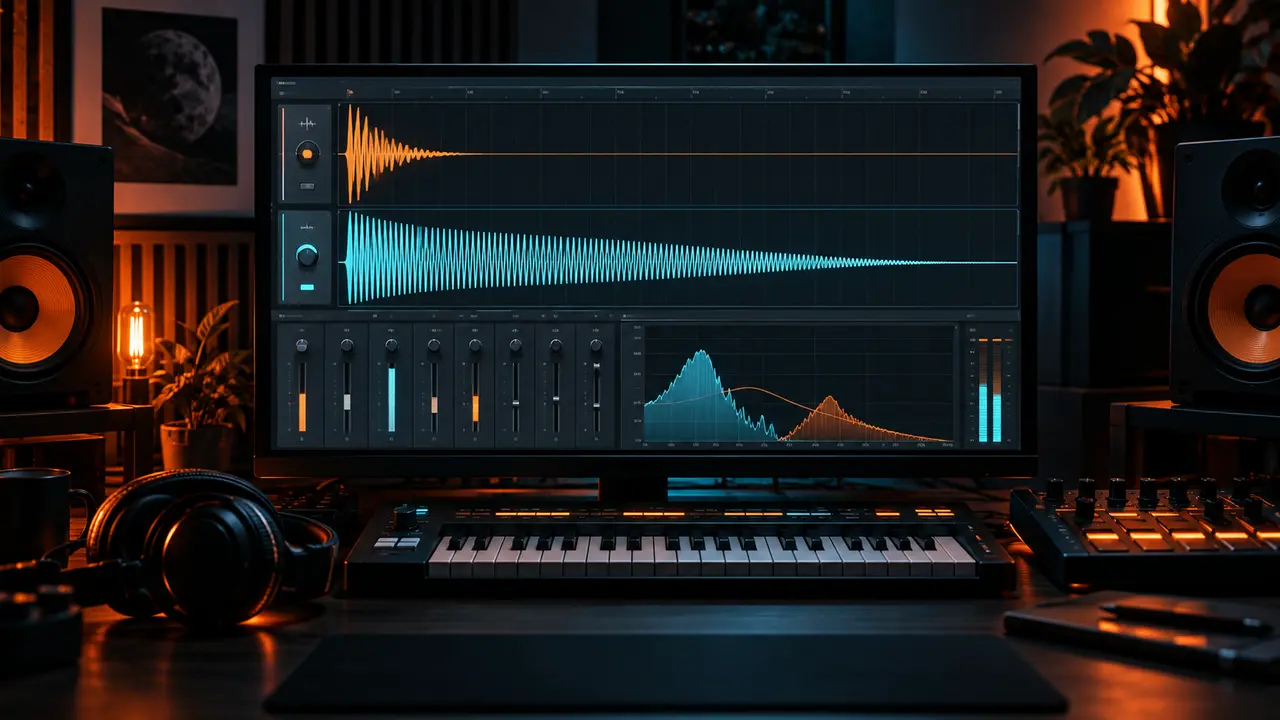
A muddy kick and 808 usually means the two sounds overlap too much in pitch, length, level or timing. The cleanest fix is often a better pairing, not a sharper EQ curve.
Use this order: choose compatible sources, tune the 808, balance the levels, shape the envelopes, check phase, then decide whether EQ or sidechain is still needed.
Start with two sounds that can share the low end
A long, sub-heavy kick may fight a sustained 808 because both occupy the same moment and similar low range. Try a shorter kick with a more audible attack, or choose an 808 with a cleaner beginning and controllable tail.
Audition the kick while the 808 pattern and melody play. The Trap Drum Kits and Drill Drum Kits collections provide public options with different envelopes. For a broader low-end guide, see Best 808 Drum Kits & Sample Packs in 2026.
Check the 808 tuning before mixing
An 808 is a bass instrument. Find its stable pitch, set the sampler root note correctly, and write notes that support the song key. The initial click may not show the true pitch, so listen to the sustained part and confirm with a tuner or spectrum display.
In FL Studio, load the sample into the Sampler Channel and set its root note after checking the pitch. Write the bass line in Piano Roll. Ableton users can set the root relationship in Simpler; Logic users can map and tune the sample in Quick Sampler. Verify by ear because filenames can be wrong.
Balance levels before reaching for EQ
Turn both sounds down and build the relationship from a clean master level. Bring up the 808 until the notes are stable, then add the kick until its attack reads without covering the bass line. If the combination becomes cloudy only when the kick enters, the kick may be too loud, too long or simply incompatible.
Check at low monitoring volume. You should hear the rhythm of the kick and the movement of the 808 as separate ideas. Loud playback can make extra sub energy feel exciting while hiding the actual balance.
Understand overlap without chasing one frequency
Every kick and 808 has a different spectrum. Some kicks peak very low; others speak mainly through the low mids and attack. Some 808s are clean sine-like tones; others contain upper harmonics. There is no universal frequency where every producer should cut.
Use an analyzer to see where energy collects, but make the decision by listening. If the 808 carries the deepest weight, a kick with less sustained sub may fit naturally. If the 808 is shorter and brighter, the kick may have room for more body.
Shape envelopes and note lengths
Time separation is often more useful than EQ. Shorten the kick tail so the 808 can sustain, or shorten selected 808 notes before important kicks. Remove silence from the sample start carefully and add a tiny fade if trimming creates a click.
In FL Studio, use the Sampler Channel envelope controls and Piano Roll note lengths. Enable cut behavior only when you want one 808 note to stop another; listen for intentional slides and transitions before changing it. Simpler and Quick Sampler offer equivalent envelope control in Ableton and Logic.
Check phase and polarity when the punch disappears
If the kick sounds full alone but loses weight with the 808, their low-frequency cycles may be combining poorly at the hit. Move the start position of the 808 by a very small amount or test polarity on one signal. Keep the version that sounds more consistent across the actual pattern.
Do not assume one polarity setting is correct for the entire song. Different 808 notes can produce different relationships. If the result changes wildly, choosing a different kick or 808 is safer than repairing every note.
Use EQ for a specific conflict
Once the source, level and envelope work, EQ can remove a narrow resonance or reduce an area where the kick and bass still mask each other. Make small moves while both play. A large boost on one channel plus a large cut on the other can create an unnatural low end.
High-pass non-bass elements only when they contain unwanted low energy. The goal is not an empty mix below an arbitrary number; it is enough room for the kick and 808 to remain readable.
Sidechain is optional, not automatic
Sidechain compression can briefly lower the 808 when the kick hits. Use it when both sounds are right but still need a little time separation. A fast, subtle dip is often enough. Heavy pumping is a creative effect, not a requirement.
In FL Studio, route the kick as a sidechain source to the 808 mixer track and use a compressor with sidechain input, such as Fruity Limiter in compression mode. Ableton Live and Logic Pro compressors also accept sidechain input. Adjust by ear; release time should follow the groove rather than a fixed recipe.
Check the result on more than one playback system
Headphones help reveal clicks, distortion and note length. Speakers show how the low end interacts with the room. A small speaker or phone can reveal whether the kick attack and 808 harmonics communicate even when deep sub is missing.
Keep the comparison level reasonable and use tracks you know as references. If one 808 note dominates only in your room, confirm with headphones before automating it. Monitoring problems and mix problems can sound similar.
Simple troubleshooting order
- Swap the kick or 808.
- Confirm the 808 root note and pattern.
- Rebalance both channels.
- Shorten the overlapping tails.
- Check phase at the hit.
- Add small EQ or sidechain moves only if needed.
Conclusion
A clean kick-and-808 mix begins with compatible sounds and deliberate note lengths. Tune the bass, balance both parts, check their phase relationship and use processing only for a problem you can hear. That approach keeps the low end powerful without turning it into one blurred signal.